Saturday, September 4, 2010

PPE Part 2: I Hate Hadedas

PPE stands for Personal Protection Equipment (and Philosophy, Politics and Economics, but not on this blog). PPE, as the name suggests, is meant to protect you from injury and long-term damage to your senses as a result of exposure to operational health and safety risks. As a female engineer, it also protects you from flattery and compliments, and can cause long-term damage to your sense of femininity and style if you’re not vigilant. This is part 2 in a series of posts dedicated to the joys of wearing PPE.


I hate hadedas.


I was reminded of how much I hate hadedas on Tuesday morning as I lay in bed, desperately trying to oversleep. I had just hit snooze for the second time when the sparrows, or swallows or cuckoos - or whatever annoying bird species inhabit the trees outside my flat - started chirping. A good sound on a lazy Sunday morning. But on a Tuesday at 7am when you’re wishing you were a beach bum instead of a diligent professional? Not so much.


And this avian sensory assault of chirping made me think of hadedas. It made me think of how when I moved to Durban to start my first job, I had a squawking wake-up call from a few of these creatures every morning. At sunrise. Sunrise! Which in Durban in summer is around 5am. (My morning routine is purposely kept to 30 minutes so that I can sleep until 6:30am at least, and 7am where possible.) Anyway, like I said I had moved to Durban to start my first job. After about a week of learning about the company values and policies, filling out endless forms for pension, medical aid, taxes, etc and sitting through a factory induction, I got issued with all the relevant PPE and I was finally taken into the factory. Little did I realise that I had just been introduced to the antidote to the poisonous sound of 5am hadeda squawking: earplugs!


I remember feeling like I was under water the first time I wore them. We had the kind that you squeeze, compress and then stick into your ear. Once they’re in you feel them slowly expand and it’s as if some invisible DJ is fading out the sounds around you. You can talk to people but you have to concentrate a bit harder and speak a bit louder. And I don’t know if it’s just me but I swear when I wear earplugs it feels like I can hear the thud of each step I take from the inside of my head like the sound is travelling up through my bones from the floor.


They become a bit uncomfortable after wearing them for a while, but – as with all PPE – you get used to it. I can’t imagine that wearing them all day long, like plant operators have to, would be too pleasant though. Hence all the poster campaigns to remind and convince people to wear them.

At some point I forgot a pair of earplugs in my jeans pocket and unknowingly took them home. I left them on my dresser and forgot about them. I don’t remember the details anymore but somewhere along the line I realised that they were the perfect answer to my hadeda horrors. So perfect that I started going to sleep with them at night to make damn sure I slept through The Squawking. My earplugs became so precious to me that I started keeping them in a little ear-ring box next to my bed. And from time to time I would “forget” a pair in my pocket to replace the ones at home.

Good news for me is that the bank has recently begun enforcing hearing protection in certain areas of the cash centres where I work now. I think it’s time to fill the ear-ring box again. Or to buy a pellet gun.


Consolatory PPE perks: Daily incentive to clean your ears effectively. Trust me, you don’t want to remove an earplug in front of people and find a blob of ear wax attached to it.

Alternative uses: (1) Sleep enablers: As I've just harped on about... Hearing protection against hadedas and other annoying birds, snoring boyfriends/girlfriends/spouses or neighbourhood kids making a racket when you’ve had a late night. (2) Stress relief: They can serve as miniature squishy stress balls that you can play with when you’re bored in meetings.

Sunday, August 29, 2010

Mountain out of a Mine Dump

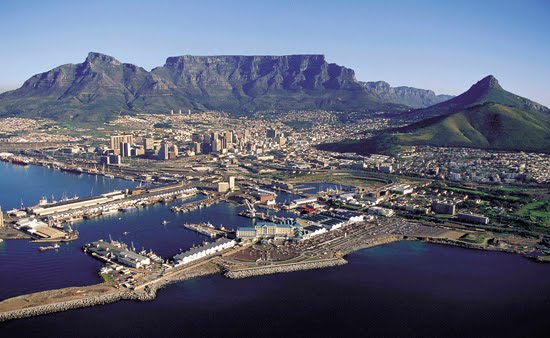
This is where I grew up (and where I recently moved back to): Cape Town


This is where I should have moved to if I wanted a successful career as a hard core chemical engineer: Secunda


In my third year at varsity I turned down a bursary with a large petrochemical company purely because I could not see myself going to Secunda for two months of vac work, let alone moving there indefinitely. (Maybe a short-sighted decision, but let’s leave that for another post.)

I grew up in the city of Cape Town. The oldest city in South Africa, sometimes referred to as the Mother City, The Cape of Good Hope or The Cape of Storms. My family didn’t live in the fanciest of neighbourhoods but the beauty of living in Cape Town is that regardless of whether you live in the best or the worst neighbourhood you have some kind of view of the mountain, or the sea, or both. I lived about 40 minutes away from Table Mountain with the nearest beach less than 3 km away. Hiking up the mountain and lounging at the seaside were a regular part of my life and it never crossed my mind that one day that may change.

When I chose to study chemical engineering, I failed to realise one rather crucial detail: Chemical engineers do not work in pretty coastal cities like Cape Town. Real hard core chemical engineers work on mines or petrochemical plants. The biggest mines or petrochemical plants are in the middle of nowhere. And when you work on a mine or a petrochem plant, you also tend to live in the middle of nowhere in some odd little dorpie (dorp = town) with a name that ends in “burg”. Sasolburg, Rustenburg, Heidelburg, Middelburg. A dorpie that only exists because that particular mine or plant exists and the staff needs somewhere to live.

Me? I decided to opt for soft core chemical engineering in the FMCG (fast moving consumer goods) industry. I started off by moving to Durban (a city on the east coast of South Africa), which at least had coastal appeal if not easy access to a mountain. A year later I weaned myself off the ocean and moved inland to Boksburg, an old mining town which is now also a general industrial area, just outside of Johannesburg. (I guess Johannesburg itself is an old mining town - the evidence being the mine dumps gracing the side of the M2 highway - but it's now grown into the largest city in SA.) Somewhere in between I visited a friend who was living in Secunda and working for a large petrochemical company. I drove there from Jo'burg with a fellow femgineer friend who had also opted out of hard core chem eng into FMCG. When we arrived there I felt like we were Paris Hilton and Nicole Richie leaving the big city for some hick town to film an episode of The Simple Life. The parking lot at any mall in Jo'burg was busier that the main street of this town. There was a flashing set of traffic lights that had been broken for so long it was one of the landmarks on the map my friend drew for us. Turn right at The Flashing Lights, no kidding. The locals sported 1980s farmer-style two-toned shirts. And instead of having a view of a mountain wherever you were, you had a view – and the stench - of the vast plant flaring away like a grotesque birthday cake.

Having said that, I suppose living in Boksburg - which I did for three years - was not much better. Two-toned shirts? Check! Mullets? Check! Mine dumps? Check, check, check! After some time I had started to fantasize that the mine dumps on the horizon were actually beautiful, majestic mountains. In fact, by the time I left Boksburg, I had to remind myself that they were mine dumps and not mountains. I guess my coastal brain had finally short-circuited after being too high above sea level for so long.

I wish I could say that all is now well and I spend my days mountain-gazing, sipping mocktails and breathing in sea air. But even though I’m living in Cape Town again I still spend most of my time working in Johannesburg right now.

And these days the mine dumps... just look like mine dumps.

Saturday, July 24, 2010

PPE Part 1: Net Worth

PPE stands for Personal Protection Equipment (and Philosophy, Politics and Economics, but not on this blog). PPE, as the name suggests, is meant to protect you from injury and long-term damage to your senses as a result of exposure to operational health and safety risks. As a female engineer, it also protects you from flattery and compliments, and can cause long-term damage to your sense of femininity and style if you’re not vigilant. This is part 1 in a series (unless I get bored after Part 1) of posts dedicated to the joys of wearing PPE.


I have a confession: Although I mention hard hats in the title of this blog, I must admit I’ve hardly ever worn one in my career. As a student I wore a hard hat once during a site visit to a petro-chemical plant. The only other time I needed one was for a few months when a section of the washing powder factory I worked in was under construction. Hard hats are not too bad. I actually think they’re kind of hot in a tom-boy sort of way. (And its fun to knock yourself on the head with your fist when you’re wearing one because you don’t feel anything and you hear that hollow sound from inside the hat. If you’ve ever worn one, you must’ve done that at least once. Or is it just me?...) The only drawback is hard hat-hair. If you have big hair, guaranteed it’ll be flattened after an hour or so of wearing one.


Hairnets on the other hand… Hairnets just look ridiculous. And “hairnets and heels” just doesn’t sound as catchy. They don’t hurt, or itch or make you sweat but I just hate them. I had the misfortune of spending the greater part of last year wearing a hairnet. I worked in a margarine factory and understandably human hair is the last thing consumers would like to find buried in their tubs of low fat spread. Well, actually the last thing is probably a cockroach… But even if you’re bald, upon entry to the plant you pull on a hairnet.

Fine. But I still hate them. I hope I never wear another hairnet in my lifetime.

Now would be a good time to reveal my ethnicity as it may help to contextualise my specific disdain for hairnets. I am a coloured** woman from
Cape Town. Cape Town is home to, and famous for, it’s many fisheries and fish shops. Many coloured women work in fish shops and they all wear hairnets. I think the first time I ever saw a hairnet was on the head of a woman who worked in a fish shop. I associate hairnets with working in fish shops. For years I strived to get good grades so that I could go to university, get a degree and a good job so that I would not be a woman in a fish shop. Or a cashier at Shoprite. Or a factory worker, bad as that may sound. Yes, I guess that makes me a snob. And yes, I see the irony that I ended up in a factory anyway. Wearing a hairnet.


Consolatory PPE perks: Hairnets are excellent for masking a bad hair day. On a good hair day they do not cause the same degree of damage as hard hats.

Alternative uses: I know of two: (1) Socks. I worked at a personal care products factory (shampoo, lotion, deodorants) where all staff were meant to wear hairnets. Instead we were issued with baseball caps because management realised they were spending way more than anticipated on replenishing hairnets. Why? The operators were wearing them as socks. Secret socks. The secret being that they were stealing PPE to save… what? Money on washing powder? (2) Food cover. My mom uses hairnets to cover dishes of food when there are flies around. Unused hairnets, by the way. My aunt is a QA (Quality Assurance) manager at a food products manufacturing factory, and she provides them to the women in my family for this purpose. I’m not sure if management knows.

**For the non-South African readers: Please note that in South Africa “coloured” is a legitimate label for people of mixed racial origin and most people do not view it as any more as offensive than the terms “black” and “white”. The coloured population is considered to be previously disadvantaged as a result of the Apartheid system. Levels of affluence have been on the rise since the end of Apartheid but many communities are still impoverished and suffering the social effects of forced removals of the previous era.